Watching this cycle of layoffs and revaluations across B2B software, one pattern keeps surfacing. The companies getting hit hardest are the ones that confused useful product with durable position. Edward Hsu's recent piece, Wedges, Control Points, and the Missing Discipline in Product Strategy, names that distinction more clearly than anything I have read this year. Worth reading.
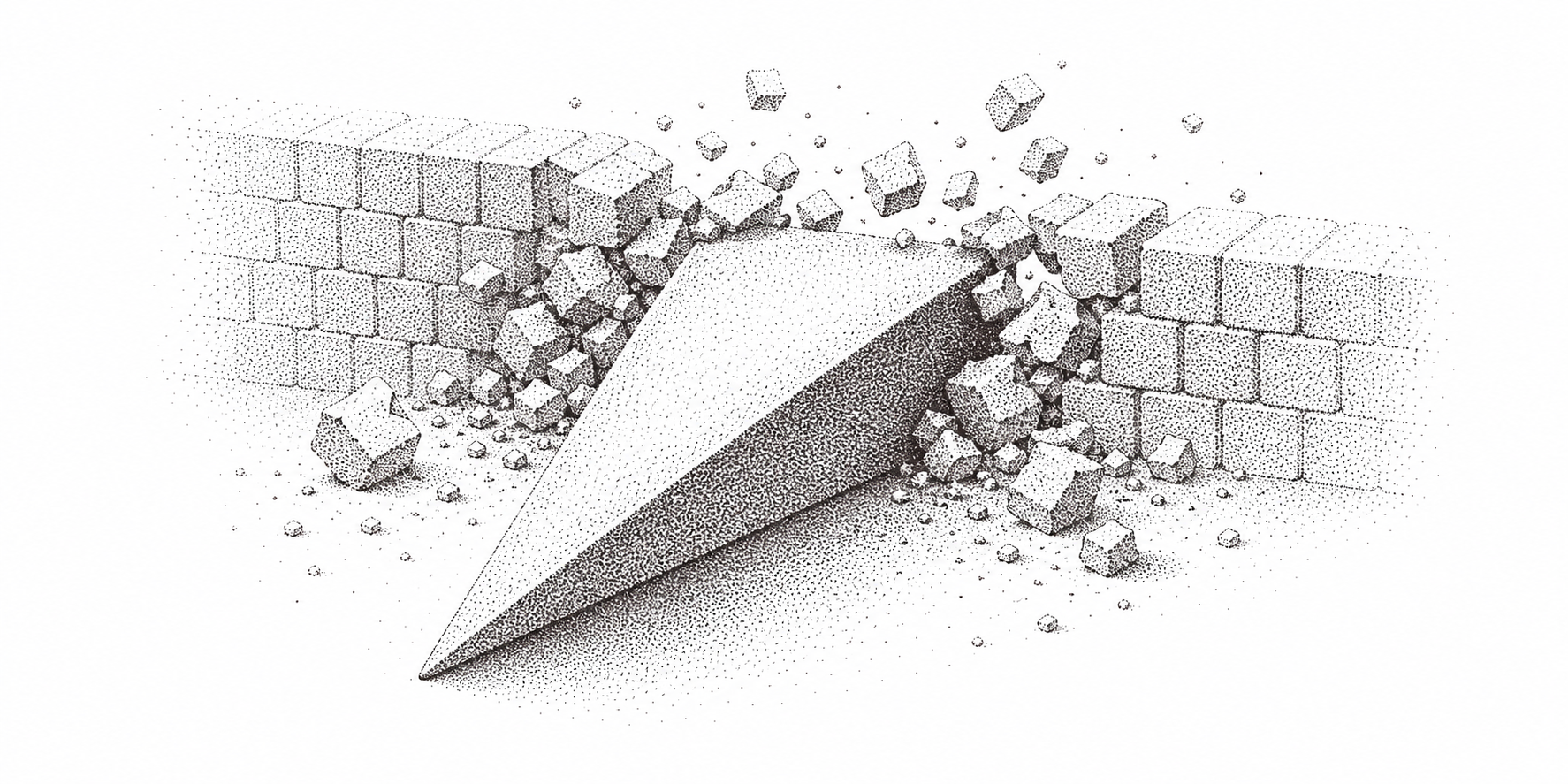
The argument in a nutshell: a wedge is how you get into a market. A control point is a position in a value chain that others must depend on to create, deliver, or capture value. Many teams confuse the first for the second.
Hsu's test is brutally simple: if your company disappeared tomorrow, would other companies' workflows actually break? If yes, you have a control point. If no, you have a useful product.
What a control point is not
Per Hsu, a system of intelligence is not a control point; insight that does not govern the next action can be bypassed. Sitting in the architecture is not a control point; components get swapped. Contractual lock-in is not a control point; forced loyalty evaporates the moment the customer has options. A customer list is not a control point; reach is not authority.
The distillation: usefulness is not structural position. Power in a value chain comes from being unavoidable, not just present.
Why this maps to the SaaSpocalypse argument
Regular readers of our posts know we have been arguing that the broad SaaS selloff has miscategorized purpose-built Vertical AI alongside vulnerable workflow wrappers. Raphaelle D'Ornano makes a similar case in her three-part series, and her work has shaped a lot of our thinking. Hsu gives us cleaner vocabulary for the same structural claim.
The companies that will compound through this cycle are the ones that have earned a position in the value chain their customers cannot route around. Cornered data, semantic depth, and the system of action we wrote about in Part II are not features. They are the substrate of a control point.
Hsu's Mint vs. Plaid case is the cleanest illustration in the piece. Mint built a beautiful destination product and remained dependent on the systems beneath it. Plaid moved into the connectivity layer and became the default substrate for an entire generation of fintech. Same value chain, different altitude. Founders building in Vertical AI right now should be asking themselves which one they are.
Three questions for your next strategy offsite
- If we disappeared tomorrow, what would actually break for our customers? Be specific. If the honest answer is they would be inconvenienced, you have a wedge, not a control point.
- Where in our customer's value chain does authority actually sit, and are our roadmap bets moving us toward that altitude or away from it?
- As Hsu frames, if a competitor launched something twice as good at half the price tomorrow, would a meaningful share of our customers move? If yes, you are competing on features. If no, you are competing on gravity.
Hsu has two follow-ups promised: one on the five types of control points in modern value chains, and one on the strategic maneuvers founders can use to move from wedge to structural authority. Both are on my future reading list.
Wedges, Control Points, and the Missing Discipline in Product Strategy by Edward Hsu